
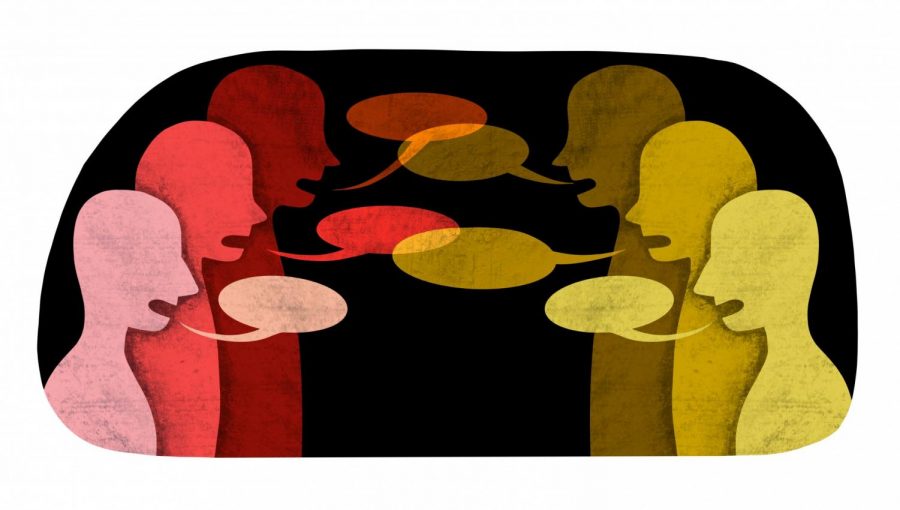
We need more attention to how scholars and scholarship can take different forms.
A good Yemeni scholar is a bad American scholar, and a good American scholar is a bad Yemeni scholar. Of course, some might argue that these two scholars of his could be reconciled and merged. I argue that such reconciliations often place one discipline as superior to the other. Or Western scholars who see traditional Islamic methods of knowledge as in harmony with science, thereby avoiding places of tension.
A scholar is a person involved in generating and communicating ideas. Monolingual thinkers and speakers are so immersed in language and culture that they may overlook the centrality of language and culture. Non-native English and non-Western scholars have different challenges, epistemologies, and realities, and therefore unconventional ways to participate in scholarships.
I was born, raised, educated, socialized, culturally adapted and formed in Yemen. This experience has shaped my sensibilities in the world. Becoming a scholar in Yemen is not about inventing or innovating ideas, but about preserving past history. Innovation is a form of deviation from the right path set early in Islam. Where I was educated in the Islamic mosques of Yemen, there was an atmosphere that encouraged strict adherence to scholarship and forbade the creation of new ideas.
But as John Kelly (1989) concludes in his essay “To Be a Scholar”, true scholarship is about generating and communicating innovative ideas. This definition gives scholars the privilege of confusing canon creations. In that sense, science is always moving forward. But where I was educated, true scholarship commits to the norms of the past without adding or modifying them.
As a budding scholar in a new context, I need to remember where I was born and at the same time reinvent myself in my newfound intellectual community. It is debated, but we often see neglect and ignorance about what international students bring, a way of thinking that reflects certain prejudices in language and culture.
We can at least assume that these students want to adapt to the American way, to know and exist in the world. But we cannot help them in their transition from one culture to another unless we understand how they are, how they act, how they know. International students who grew up in non-Western cultures and speak languages other than English need to rethink what it means to be a scholar. But how many local academics are aware of their predicament?
It has always been understood that a true scholar is one who defies simple understanding, goes beyond surface-level concepts, and challenges all assumptions. Applying that academic understanding to the word scholar itself is needed.I am training to become a scholar of English and Western culture, but have yet to study the impact of applying for scholarships in Yemen, where my academic sensibilities were formed. to be intermediate This area requires consistent learning, non-learning and adaptation. However, well-trained scholars can bridge the gap between cultures and civilizations as they step into each world.
Salman Rushdie, an internationally acclaimed author, explains the tensions I’m working with. Rushdie grew up in India, lived in England, and now lives in the United States. Few people know that this successful author stumbled over ten years (thirteen) before publishing his first book. “One of the reasons I got lost is because I grew up in one culture and lived in another. After reflecting on his own life, Rushdie (alluding to Socrates’ notion that “an unexamined life is not worth living”) became one of the world’s greatest authors and one of the world’s greatest writers. created the norms of
I grew up in Yemen for 20 years and then came to the US where I lived for 6 years. I belong neither to Yemen nor to America.
Born and raised in Yemen, Abdulrahman Bindamnan is a PhD student at the University of Minnesota. He earned his master’s degree from the University of Pennsylvania and a bachelor’s degree from the University of Miami.he can be reached at [email protected]
Comments
Post a Comment