
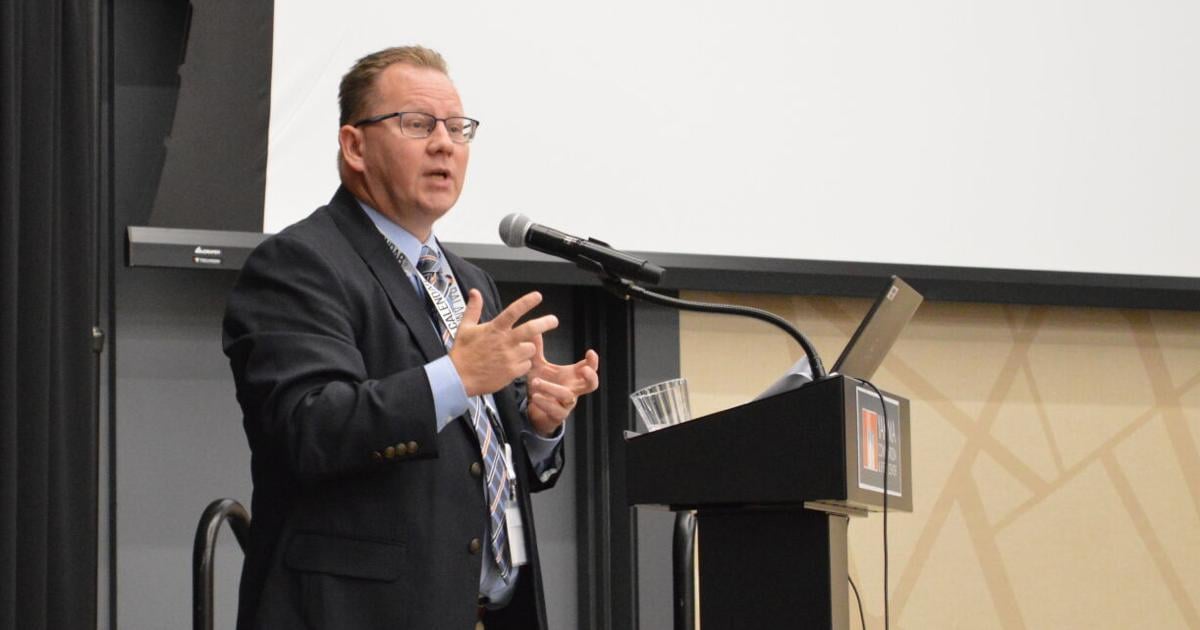
Dozens of school officials from around Washington gathered in Yakima to discuss the benefits and challenges of the revised calendar at the Yakima Convention Center on Wednesday and Thursday.
In his Thursday morning keynote address, Chris Reykdal, Washington state’s chief of public education, spoke about how traditional school calendars may not be enough to support students.
After returning from a long summer vacation, the students have forgotten the previous year’s materials. Teachers spend the next few weeks catching up. Mental health and nutrition resources may also not be available to students during the long summer, he said.
Modified or balanced calendars vary in detail, but generally try to have a shorter summer season, more frequent breaks, and a more even distribution of instruction throughout the year. The proposed calendar claims to reduce learning loss, educator burnout, and performance gaps between low-income and high-income students.
When he took office in 2017, Reykdal knew of other places where the modified calendar was being used and was interested in exploring options in Washington. Last year, school districts could each apply for up to $75,000 in grants to consider a balanced calendar.
Highland, Toppenish, Yakima, Mount Adams, Serra, and Union Gap school districts received various amounts of this grant.
Conflict arose when the Yakima school board reviewed the 2022-23 school year calendar. School board members called for further changes to the proposed calendar, which was about the same as the previous year. However, students and other members of his community were concerned that a shorter summer break would affect summer jobs, necessitating more changes after a turbulent year of the pandemic. . The board ultimately adopted a calendar similar to that used for the 2021-22 school year.
Reykdal said OSPI presents the research and potential for a balanced calendar, but it’s up to school districts to decide if the changes are right for their communities.
“We set policy expectations in place, put some money in, and let districts handle all local engagement,” he said.
He said OSPI would never require districts to adopt a balanced calendar, but there is a lot of interest. Smaller districts were the first to try.
“For now, we need early innovators to show that it’s possible everywhere,” he said. “It’s kind of starting to look rural. It’s interesting how it’s starting in a place where we think we’ll see the most severe effects of a long summer vacation.”
“State Talk”: Yakima Valley School District Tests Balanced Calendar
Union Gap School District has adopted a balanced calendar this year with a start date in early August, an end date in mid-June, and intersession weeks throughout the year. The Toppenish and Highland school districts are entering his second year with a revised calendar schedule.
Highland Superintendent Mark Anderson was attending a conference hosted by Education Services District 105.
Anderson said many of the discussions at the conference reaffirmed the efforts his school district had made. During the midweek, students can choose to come to school and work on their credit checks or take classes in subjects such as financial literacy, vocational skills, and music history.
The district also faces some challenges. Finding a budget for transportation and meal services can be difficult as the current funding model only covers 180 days of school and excludes intersessions.
Hyland hosted visits from other school districts interested in the changed calendar.Anderson estimates that school officials from 15 school districts visited last year.
.
Comments
Post a Comment