
The Finnish photonics industry is currently worth around €1.2 billion annually and employs 4,200 people. Of the 260 companies working on photonics, 60 (30%) have been established since 2016, and our main photonics capabilities are optical sensing and imaging, micro- and nano-photonics, lasers and fiber optics, VR, AR, MR, and XR. Since 2014, Photonics Finland has helped advance Finnish photonics by operating as an industry-led, interdisciplinary technology cluster. It aims to promote new frontiers in photonics research, support new product launches, create new businesses, and improve awareness. of photonics in Finland and abroad.
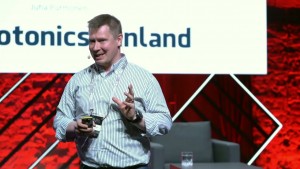
Carlos Lee, Executive Director of EPIC, had the opportunity to speak with Juha Purmonen, Executive Director of Photonics Finland, about how the technology cluster was launched and how it is driving the Finnish photonics industry. I learned.
Please tell us about your background as Executive Director of Photonics Finland.
He graduated from the University of Eastern Finland in 2002 with a Master’s Degree in Applied Mathematics. At that time, everyone was studying signal processing under the influence of Nokia, and I wrote my master’s thesis in cryptography. This included a placement as a software engineer at PT-Controlnet, where he developed various types of cryptographic solutions for unsecured Bluetooth connections. He then completed his PhD in Spectral Color Research & Photonics in 2003. It focuses on spectral video compression and machine vision technology development for spectral imaging, color science, and industrial applications.
My research included a six-month placement at the National Institute of Communications Technology in Japan and three years as a researcher at the InFotonics Center Joensuu in Finland, developing commercial applications for spectral video compression.
In 2005, I decided to use my research experience to co-found my own company, SoftColor Oy Ltd, together with my partner Petri Piirainen. Since we both have backgrounds in digital signal processing, computer graphics, and physics, our goal is to focus on developing automatic image processing based on our own patented technology for automatic color correction. was to do
The company grew steadily, but in 2010 he became Development Manager at Joensuu Science Park Ltd., responsible for developing photonics projects and directing the Nanotechnology Cluster Program. By 2012, it became clear to me and others in photonics that Finland needed to establish its own national platform in optics and photonics, as Sweden did in his 2011. rice field. Finnish local governments encourage the establishment of national clusters of photonics companies and universities to share information and promote photonics business opportunities in Finland. The result was Photonics Finland, which was launched in 2014. I was appointed Executive Director due to my leading role in the project and my experience in developing the Joensuu Science Park Cluster Program.
What were the main challenges in founding Photonics Finland?
The first challenge was to convince future members that Photonics Finland was to function as a truly national organization and not only serve the interests of large corporations and more prosperous economic regions. . To address this issue, we are always transparent and ensure that our board is made up of representatives from all major Finnish cities. The second challenge was balancing the needs of academia and industry, which clearly have different interests. I had the Photonics Sweeden case very much in mind and knew that it was important that academia and industry belonged to the same organisation. It wasn’t working, so I was encouraged to bring industry and academia together under the same umbrella. Initially, some Finnish industry representatives were wary of joining organizations with academics on their boards, fearing that most of their resources would be spent on academic research. In order to solve this problem, the president’s term of office is two years, and the industry and academia take turns. If the president is from academia, the vice-president will be from industry, and the vice-president will be from industry. established. Her six other members of the Board are similarly 50% from academia and 50% from industry.
How has Photonics Finland evolved?
Currently, there are 277 individual members and 105 corporate/social members, half from academia and half from industry. A major part of our activity is organizing events and conferences all over Finland. Technology topics vary depending on what is important to each city. For example, Kuopio specializes in healthcare and medical applications, while Cori has a history in forests and photonics. We are trying to bring photonics to as many cities as possible. For this reason, participation in the annual events “Optics and photonics days” and “The International Day of Light” are held in different cities each year. We also host annual pavilions at international exhibitions such as Photonics West and Laser Word of Photonics for interested companies.
Recruiting has become so important now that we have a “job board” for members to post their jobs in their own text. We are also promoting the Photonics Explorer Kit for Schools in connection with future adoption. Over 100 kits have been distributed in Finland with the aim of educating and encouraging a secondary school student to study her STEM subjects and consider a career in photonics.
A final important development is that Photonics Finland now has its own legal identity. This allows Finnish companies to participate in and receive funding from various European projects such as PhotonHub Europe, where they have access to expert advice and advanced photonics technology platforms. Another EU project is Photonics4Industry, which was set up to strengthen cluster management and create opportunities for interaction with other photonics clusters in Europe. We also work with Photonics21 to conduct research to collect data for compiling annual reports on the Finnish photonics industry and specific markets such as the food and forestry sectors.
.
Comments
Post a Comment